
At the Crossroads of Fundamentalism and Humanism:
Recalling Bernie Sanders's Visit to Liberty University
Recalling Bernie Sanders's Visit to Liberty University

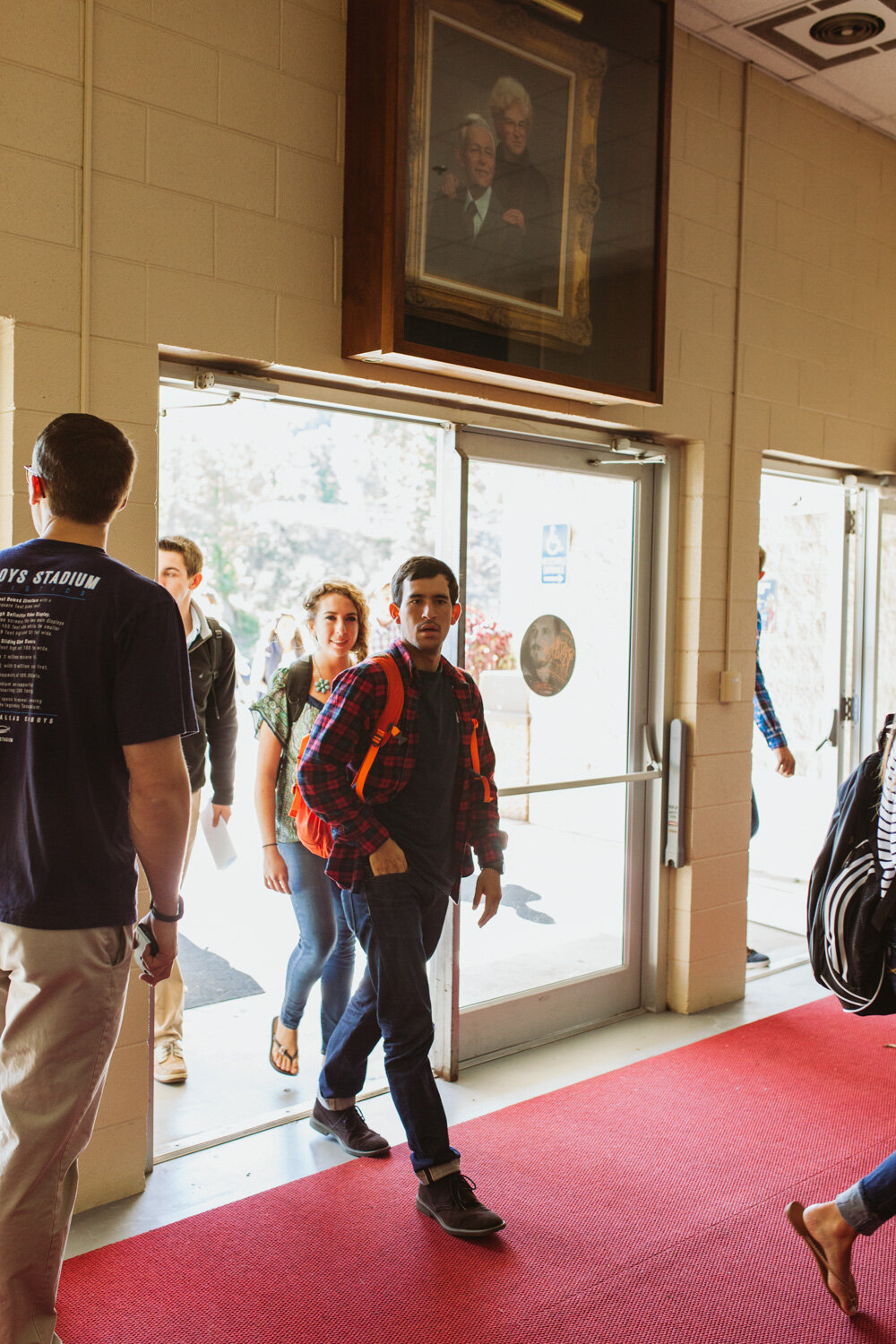
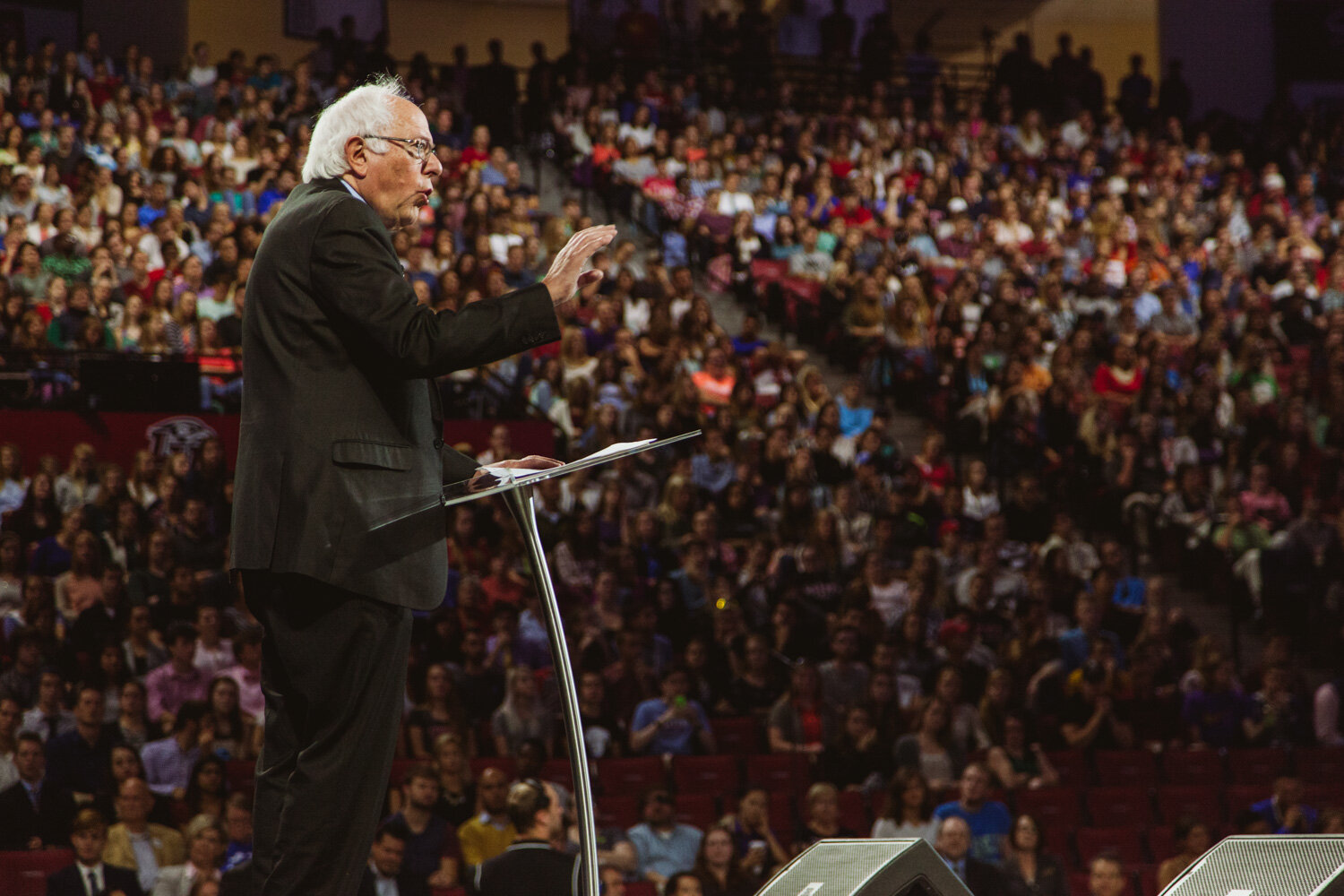
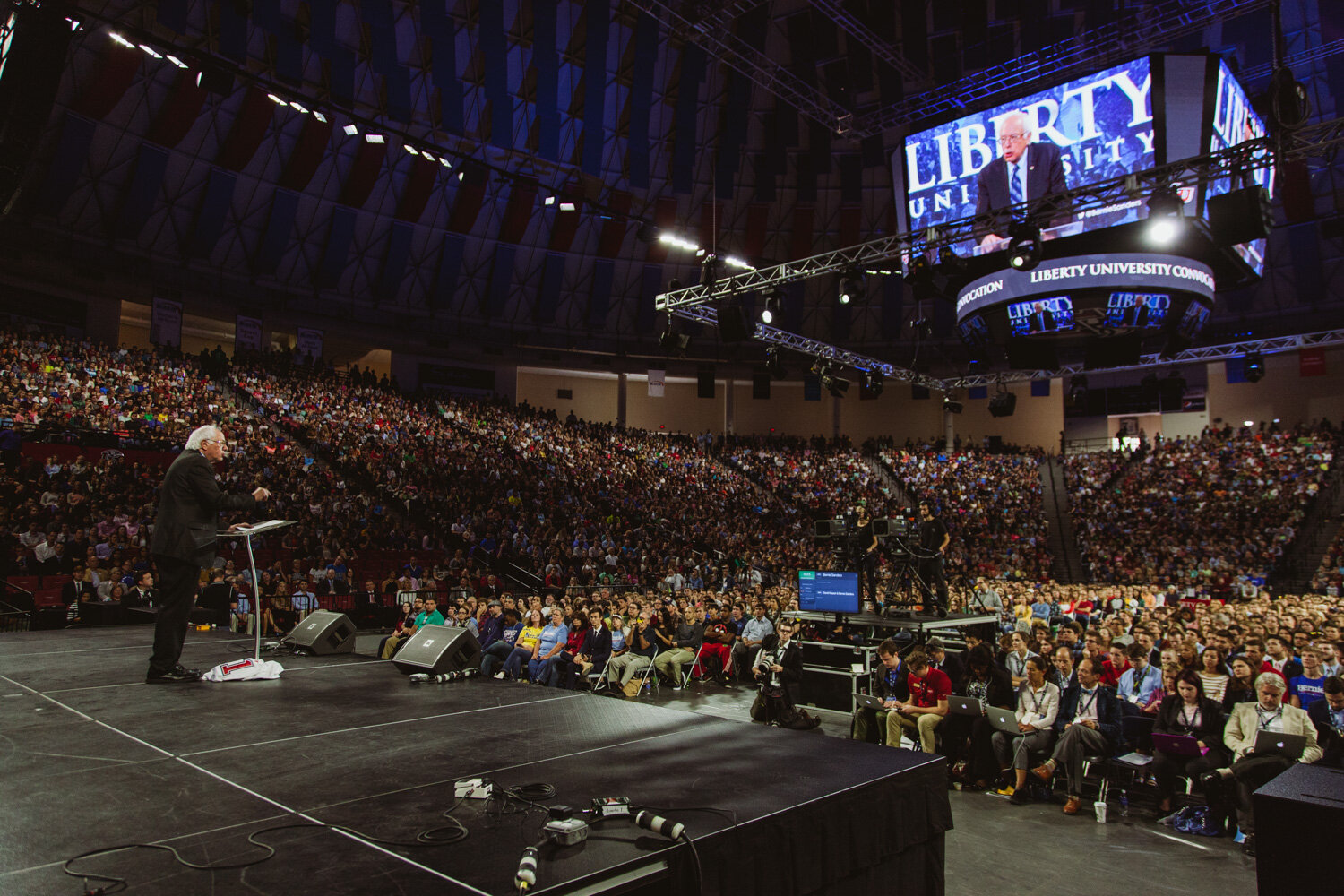
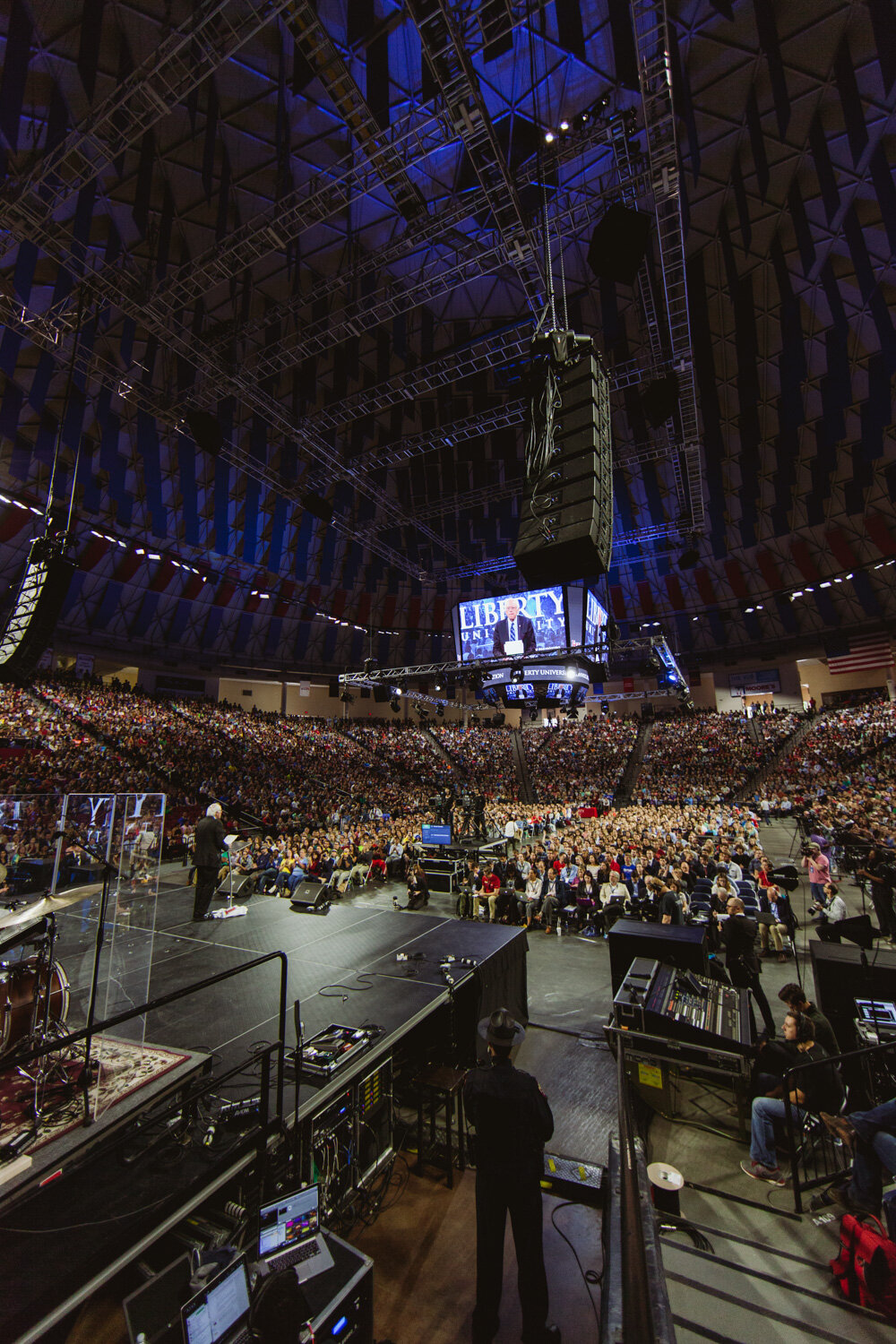
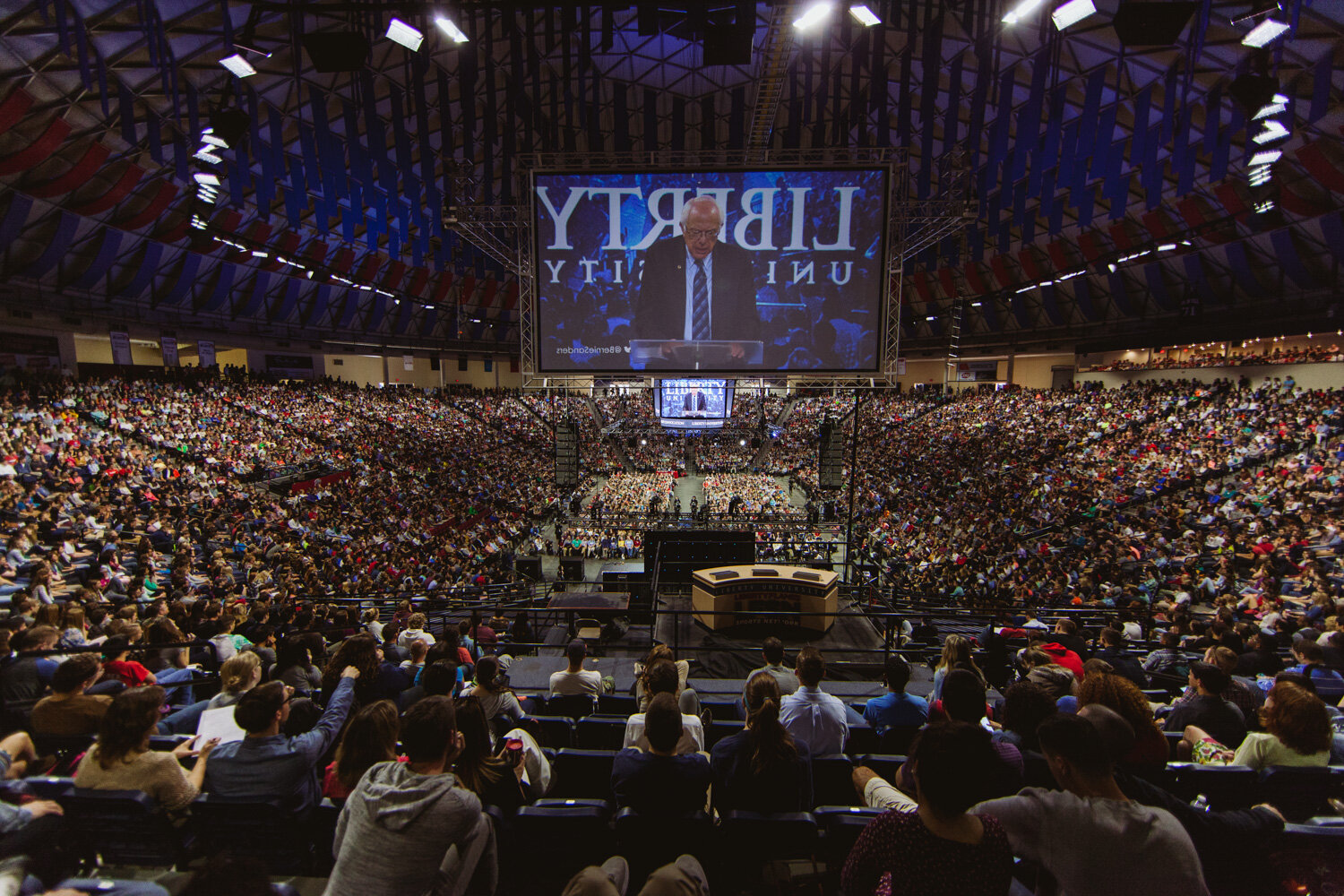
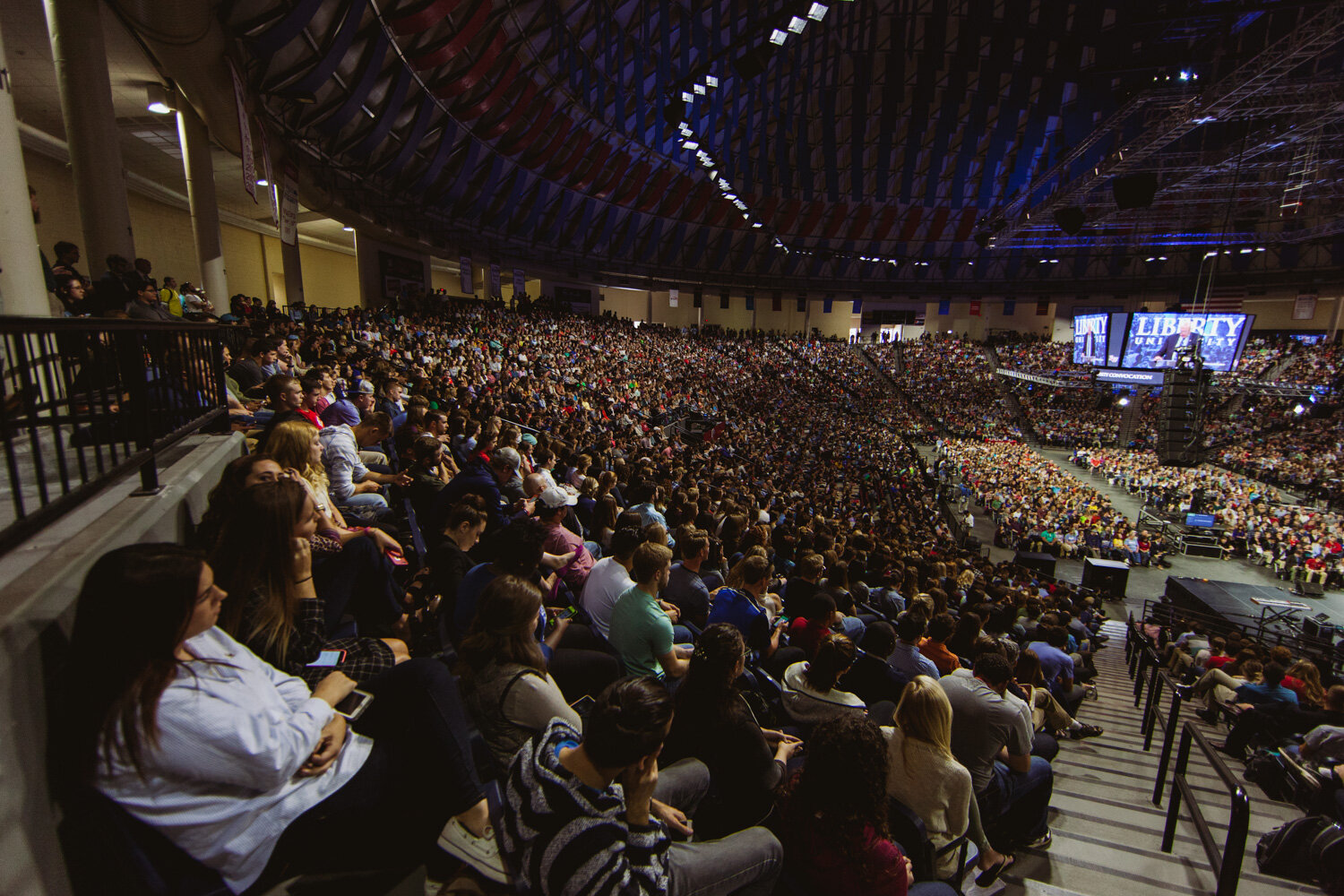
Liberty University students, among others, enter The Vines Center in Lynchburg, Virginia, on September 14, 2015 to hear US Senator Bernie Sanders speak.
“It may be that the human race is not ready for freedom.
The air of Liberty may be too rarefied for us to breathe.”Steven Pressfield, The War of Art

A news reporter gets ready to speak into the camera with the swelling in the background.

The scene at Liberty University on September 14, 2015, was a familiar one, as was the creeping feeling of overwhelming inauthenticity, likely stemming from the fact that 10 years ago I sat in those same seats three times per week attending what the university ardently claims is not a worship service, listening to people preach and sing about God. Every so often a political speaker would come through, but one could (so to speak) lower the volume on what was being said and not miss a thing. It was always the same.
That same feeling persisted while I worked as a copywriter and editor for the school’s propaganda department in 2010. It only alleviated itself once I finally left the position (and my seat in my graduate English classes 18 months later), and stepped away from 25 years of living within the Evangelical Christian community.





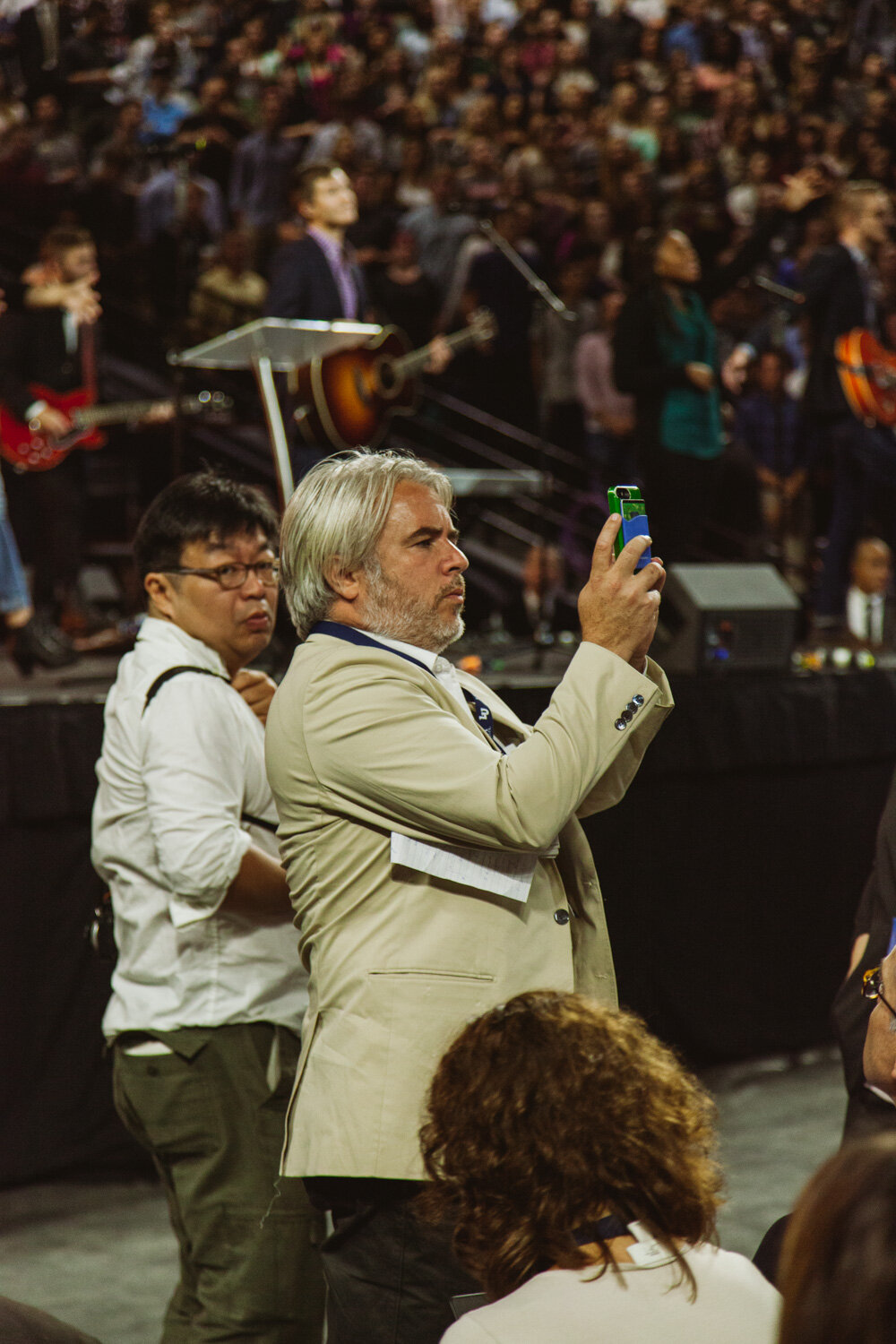
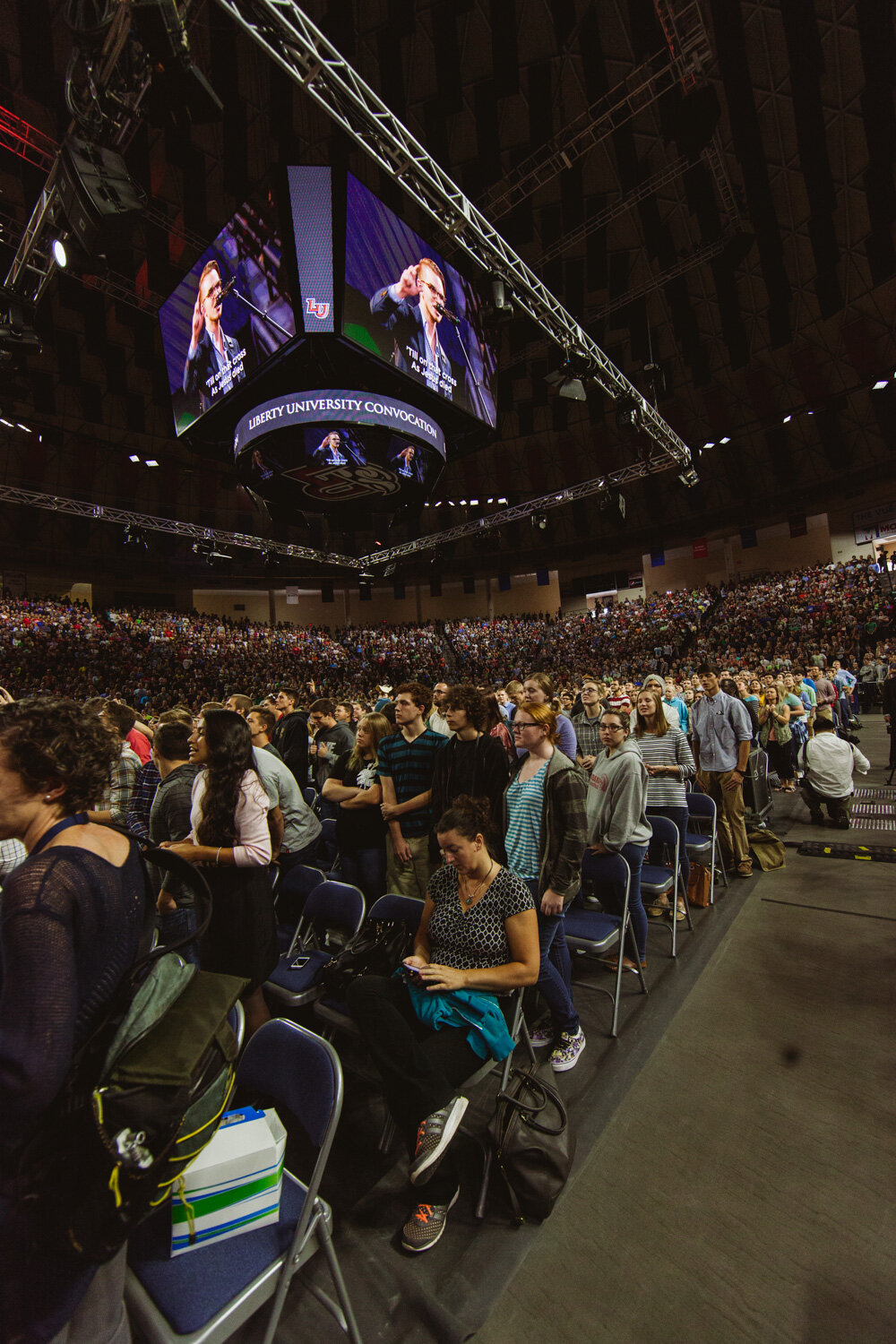

On this particular morning, I let the feeling pass over me while Liberty University Senior Vice President for Spiritual Development David Nasser prayed into the microphone, to be heard by millions:
“I pray that today, Father, that you would teach us, God, that you would use our guest today to help us know not just what to think but how to think.”
Before the guest, Vermont Senator Bernie Sanders, could rise to the podium, Nasser delivered an enthusiastic update on how a student in financial need was given $7,000 in excess of what was required for her to stay in school. She in turn decided to give the surplus to other students in need.
Another report: Students, thousands more than were expected, showed interest in a new outreach campaign to the point that the website kept crashing.
“It is by far the largest single response we’ve had like that as a student body,” Nasser said, “and I think it just goes to show that nobody is a greater servant than a Liberty University student.” It was the first of two wildly hyperbolic sentiments Nasser would utter — well aligned with my overall LU experience.

As if to serve as a reminder to those in attendance and viewing around the world of the particular socio-intellectual climate they were entering into, the praise band performed “This I Believe (The Creed).” Rather than an artful expression of worship of an all-powerful, all-encompassing deity, the song is a listing of the basic tenets of Christianity set to the emotionally saccharine soundscapes usually found during the tender moments of a summer romance flick — built by major and minor chords carefully tied to the heartstrings they're intend to pull.

Liberty University praise band performs “This I Believe (The Creed).”
Following the incantation, Nasser returned to the microphone to introduce Liberty University President Jerry Falwell, son of Liberty’s founder, the late Jerry Falwell Sr. — a man infamous for blending political consciousness with evangelical conservatism (among other controversies).
“Nobody loves you more, Liberty students, than our president,” Nasser said of the extant Falwell. “No one cares about you, wants the best for you and wants to see you be world-class leaders more than our president.”
Nasser said that students reciprocate that love, and as an illustration explained that the guttural bellow of “JE-RRYYYY” the students would initiate upon his approach to the podium, was a sign of a support, rather than a cacophonous jeer.
This cheerleading rigamarole, the endless qualifying and over-stressing of statements is identical to the form and feel that I experienced as a student and employee. It always seemed intended to ensure that the perception of Liberty, its students, and its administrators is not left up to chance.
Even Falwell’s gifting of a personalized football jersey to Sanders felt nearly ritualistic; I have witnessed many guest speakers receive memorabilia or honorary degrees over the years and it carried the feeling for me of Liberty trying to “mark” someone for the university’s own edification.
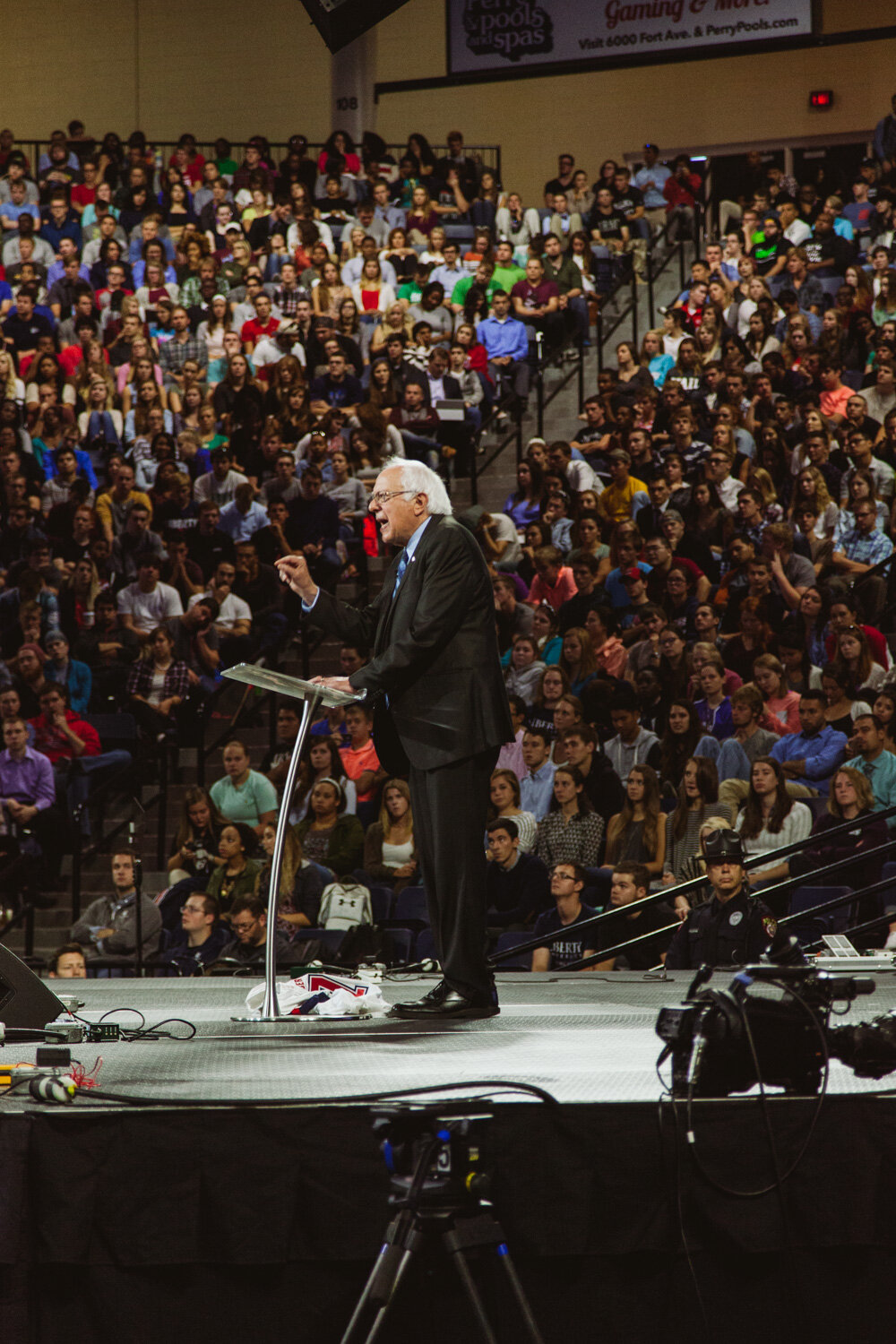
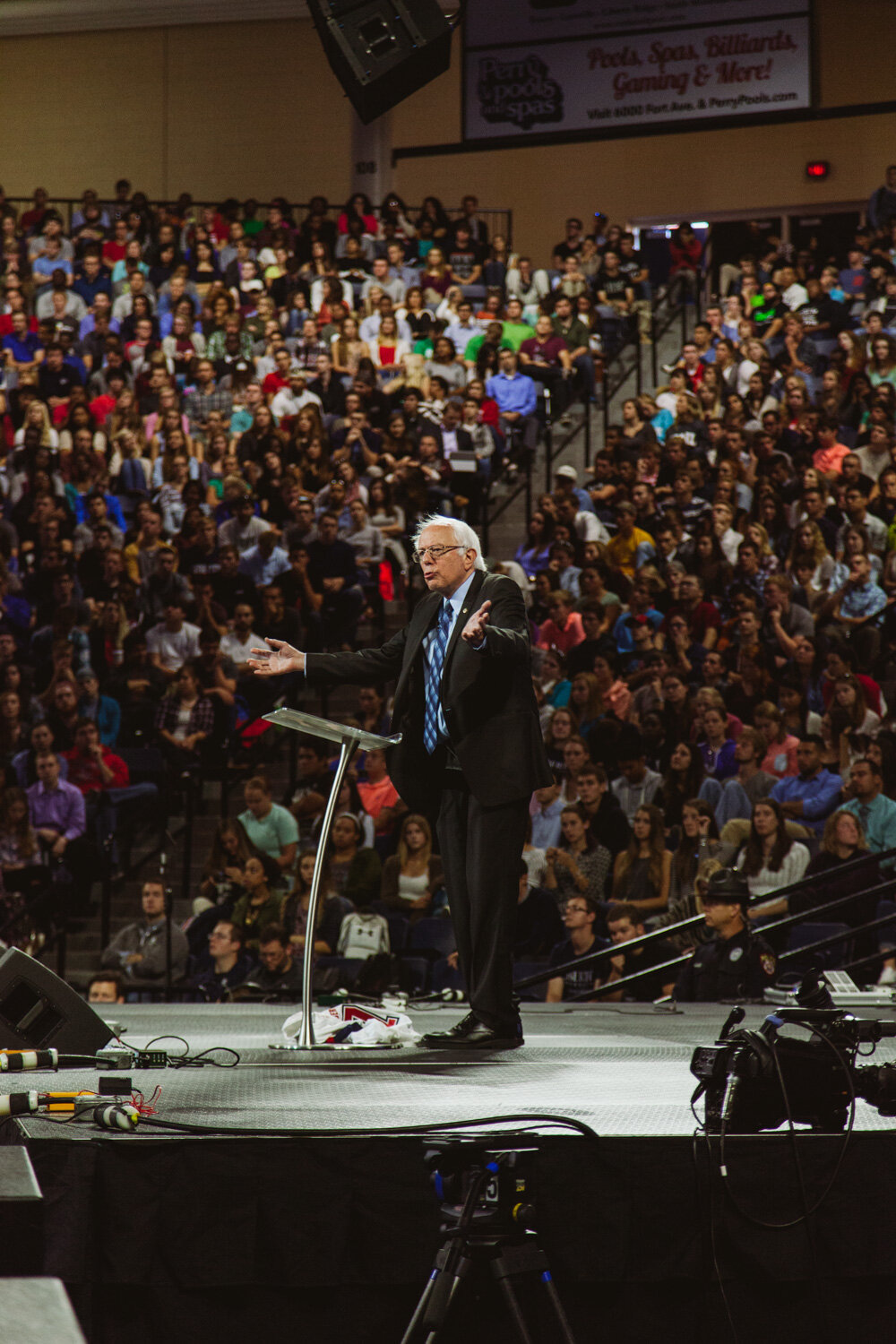
After Liberty had sufficient opportunity to position their cultural niceties and carefully construct their whitewashed house of cards, Sanders began his speech by cutting straight to the quick
“Nobody loves you more, Liberty students, than our president. No one cares about you, wants the best for you and wants to see you be world-class leaders more than our president.”
“[L]et me start off by acknowledging what I think all of you already know. And that is the views that many here at Liberty University have and I [have], on a number of important issues, are very, very different.”
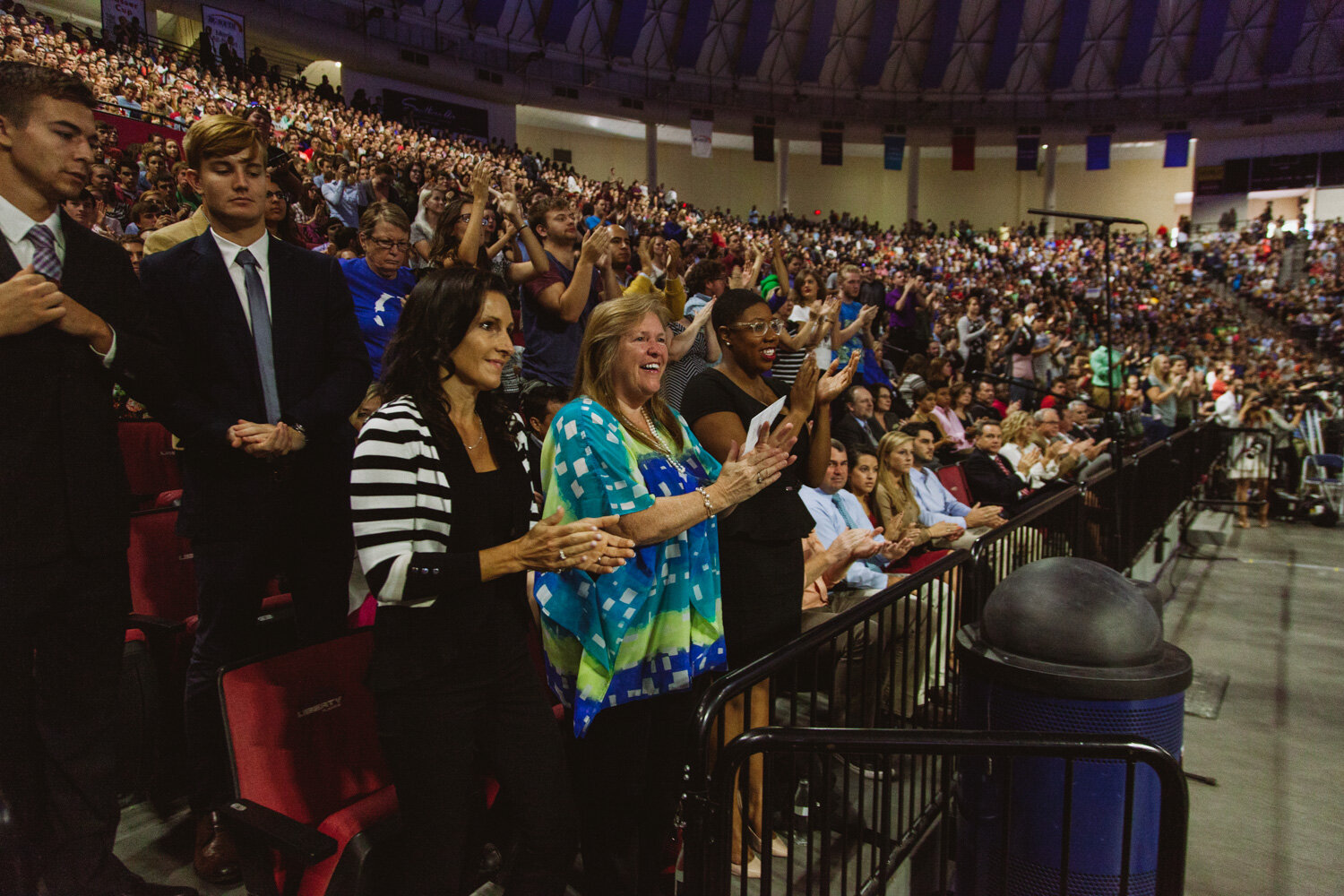
A fair amount cheered in support of those beliefs: gender equality, the right for a woman to control her own body, LGBTQIA+ rights, and gay marriage. Some of the voices belonged to students. As it was during my time as a student, many on campus are not as conservative as the administration’s statements to the press imply.

Liberty University Senior Vice President for Spiritual Development David Nasser addresses the audience. Liberty University President Jerry Falwell Jr. and US Senator Bernie Sanders sit in the background.
“But I came here today,” Sanders said, “because I believe from the bottom of my heart that it is vitally important for those of us who hold different views to be able to engage in a civil discourse.”
In case you missed it, you can watch and read that discourse in entirety here. I won’t analyze or recount much of what he said in this piece, as that has been done in dozens of other places in the days since he came to speak.
What’s most interesting to me about this event is the interaction between these two forces: Evangelical conservatism and self-spun socialism. A clean Protestant comb-over and the wily white wisps of an irreligious Jew. My past haunts and my present leanings. The fundamentalist and the humanist.
In the evening after the engagement, my co-parent was at a local bookstore preparing for the next day of her teaching job, and I asked her pick me up a copy of Steven Pressfield’s creative manifesto, The War of Art. One section of the book, called “Resistance and Fundamentalism” does an excellent job comparing these forces.
“The artist and the fundamentalist both confront the same issue,” Pressfield writes, “the mystery of their existence as individuals. Each asks the same questions: Who am I? Why am I here? What is the meaning of life?”
So, there is common ground here. Sanders positions that commonality with a different, yet related, question: “What does it mean to live a moral life?” How does one govern morally?
“The difference is that while one looks forward, hoping to create a better world, the other looks backward, seeking to return to a purer world from which he and all have fallen.”
Steven Pressfield
The War of Art
That common ground falls away, however, at the precise moment each party seeks their reply. The fundamentalist, says Pressfield (an authority on ancient Greek civilization, the author of The Legend of Bagger Vance, and a self-described Christian), attempts to find an answer in sacred texts written thousands of years ago, in the context of a society far removed from our own, and attempts to apply those old responses to today’s complex cultural landscape.
“The difference is that while one looks forward, hoping to create a better world, the other looks backward, seeking to return to a purer world from which he and all have fallen,” Pressfield says.
The artist (or humanist — the author uses the two terms interchangeably in this section) seeks to find that answer in the here and now:
“The humanist believes that humankind, as individuals, is called upon to co-create the world with God. This is why he values human life so highly. In his view, things do progress, life does evolve; each individual has value, at least potentially, in advancing the cause.”
The latter approach, is a far greater challenge, but is more in line with the demands of a global society that faces ever-the-more complicated trials and questions.
Reducing the presidential election to two issues (gay marriage and abortion), then, as Christian fundamentalists have stereotypically done, is far more understandable given Pressfield’s distinctions. It’s just so much easier. It requires less thinking and deliberating. There's effort and uncertainty involved.
The fundamentalist doesn’t have to weigh the pros and cons of carrying a fetus to full term when it’s diagnosed with skeletal dysplasia. The fundamentalist doesn’t have to dive into the alleged moral ambiguity of a person who has felt like a stranger in their own body, only to feel whole through modern science’s ability to allow her to affirm the gender she (or he or they) has identified with all along. To the fundamentalist, the answer is clear. The baby will be born (and, in some cases, summarily die). A man is a man and a woman is a woman. Thinking anything outside of that makes you wrong: a murderer, a freak, a pervert, a sinner — lost.
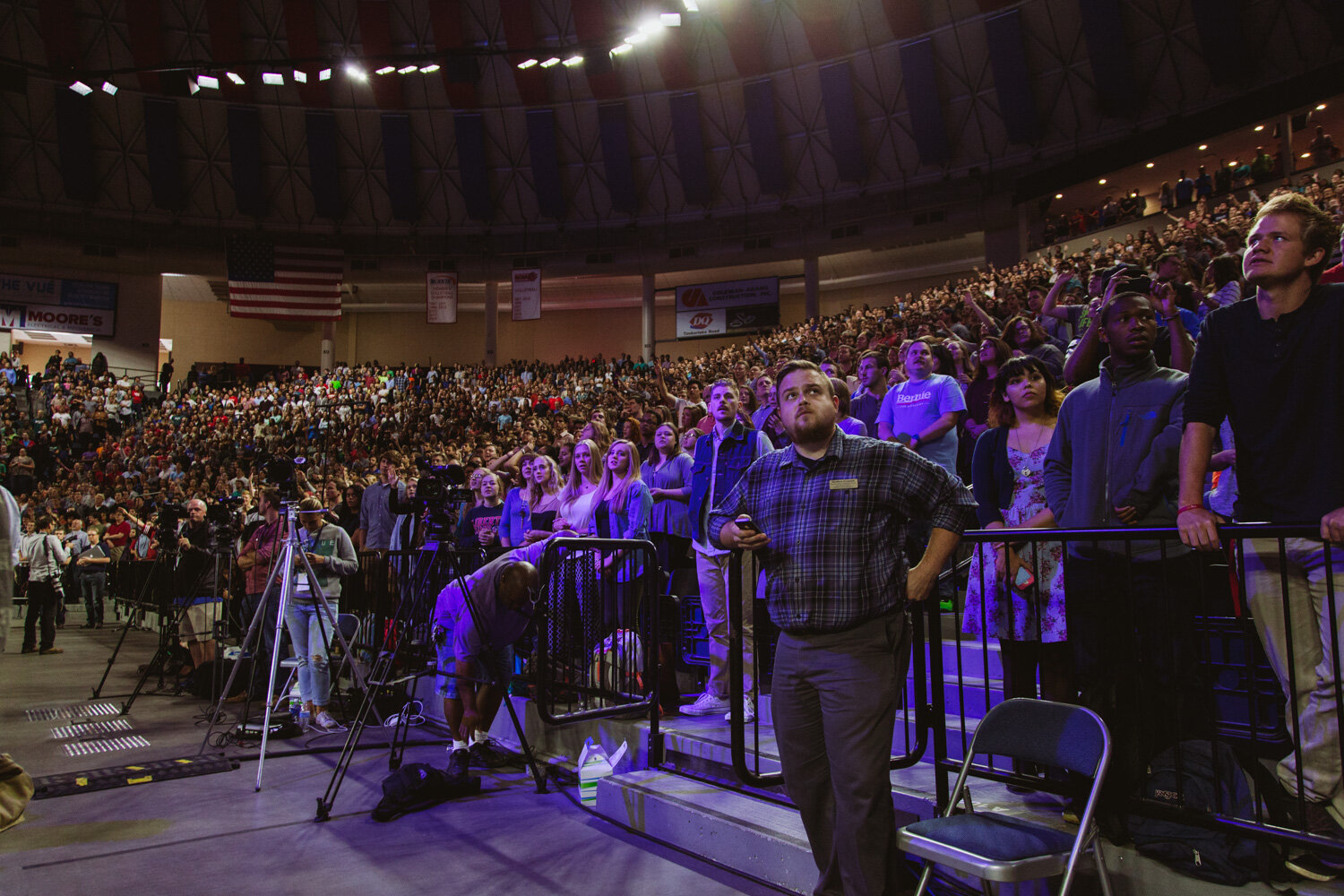



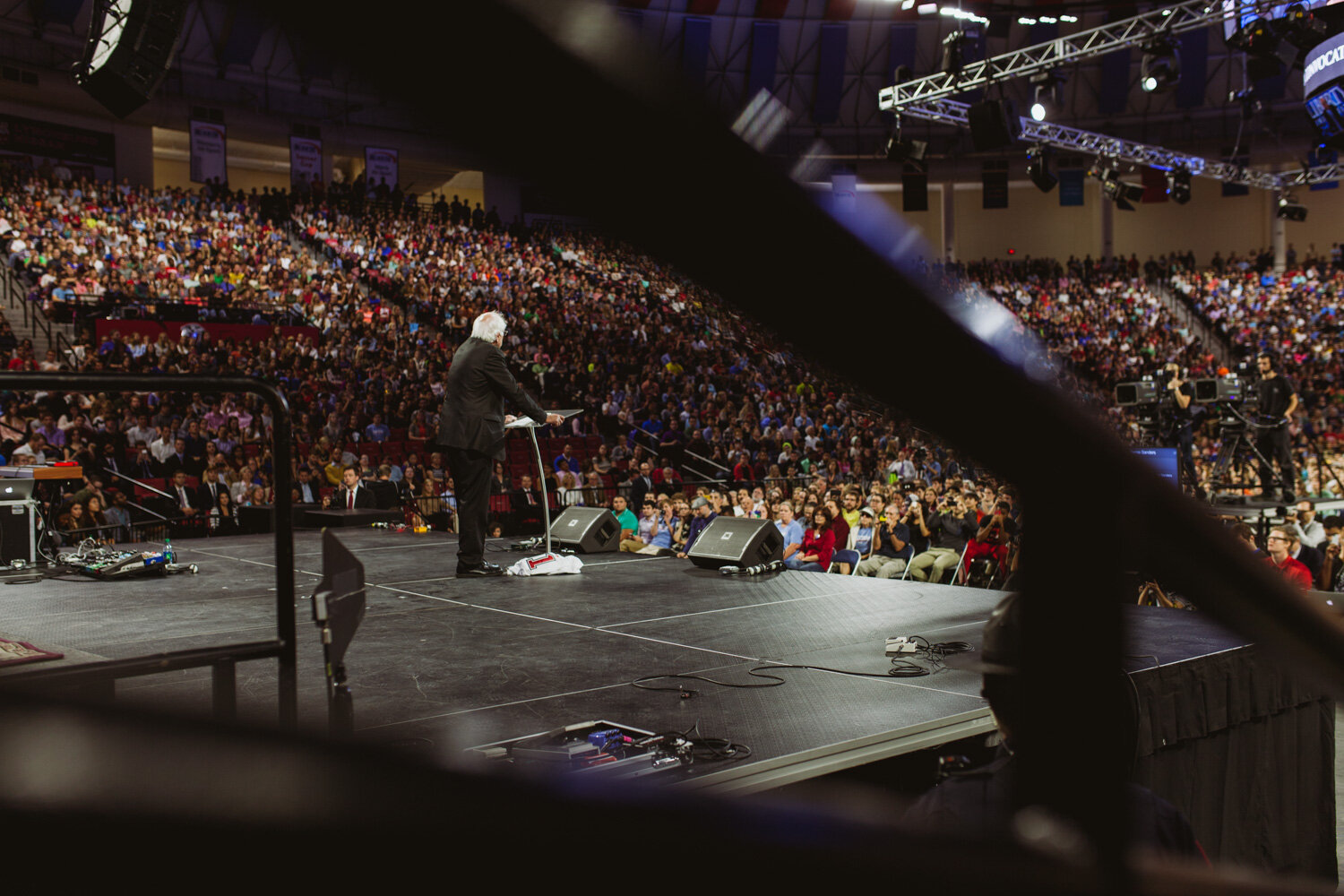
The fundamentalists can sit quietly in their seats, letting their thoughts drift to a homework assignment or their eyes to smartphone screens during the speech and Q&A, while Sanders postures that the United States is not a just nation. But those same individuals can jump into raucous applause when the campus spiritual leader offers a cute rebuttal about inequality: “It’s not a skin issue, but a sin issue.” (Note: A clever turn-of-phrase does not an absolute truth make.)
But there is hope. I spoke with a Liberty University resident assistant who said she cheered for the right for a woman to have control over her own body (although a guy from behind offered her a consequential “fuck you”).
I spoke with a few others who said that you no longer get reprimanded, fined and expelled for being gay at LU, as you would have in the past. And for further sense being made, I encourage you to hear the words of an evangelical pastor (and fellow alumnus) who equated Sander’s plea at Liberty to John the Baptist decrying the Pharisees.
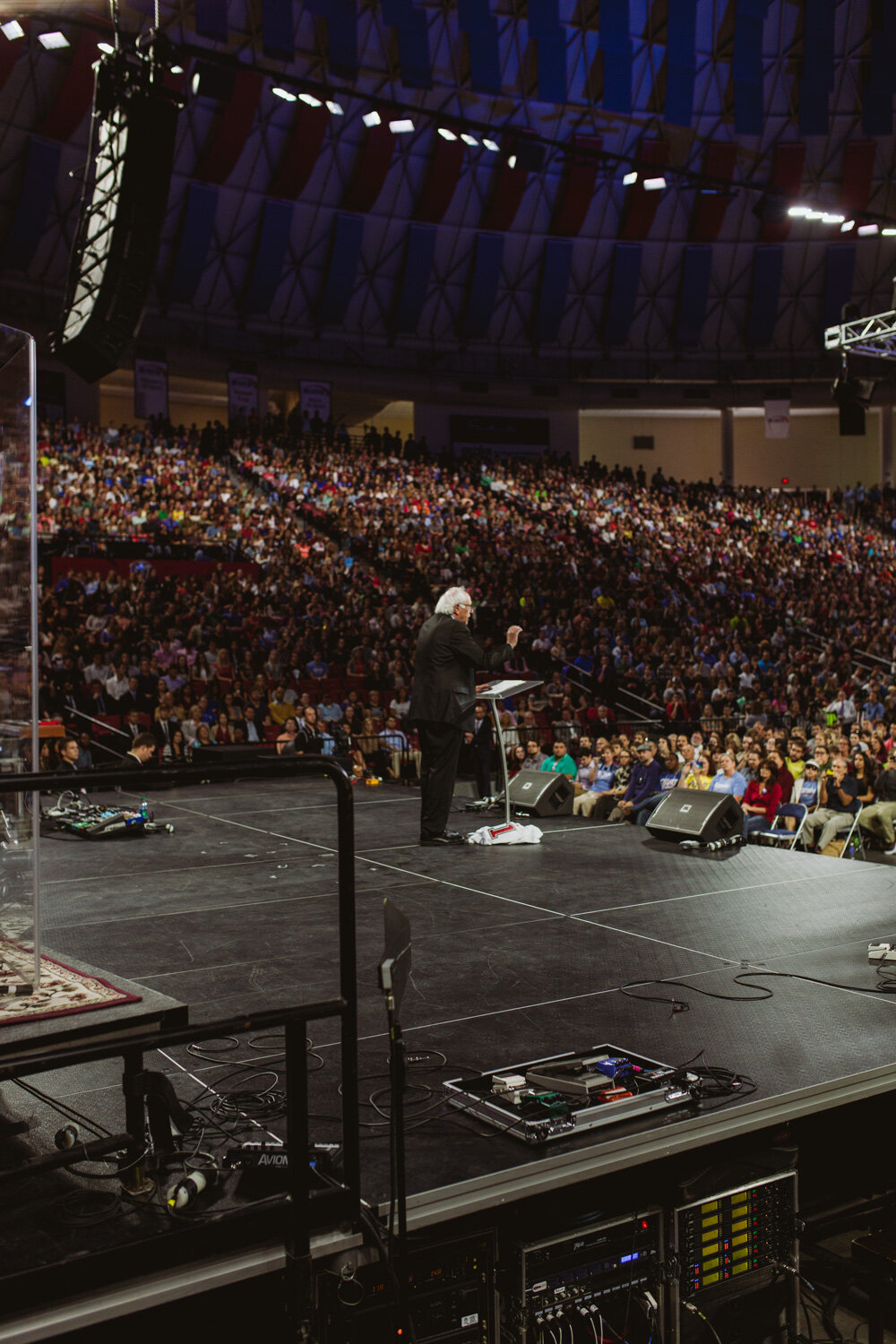
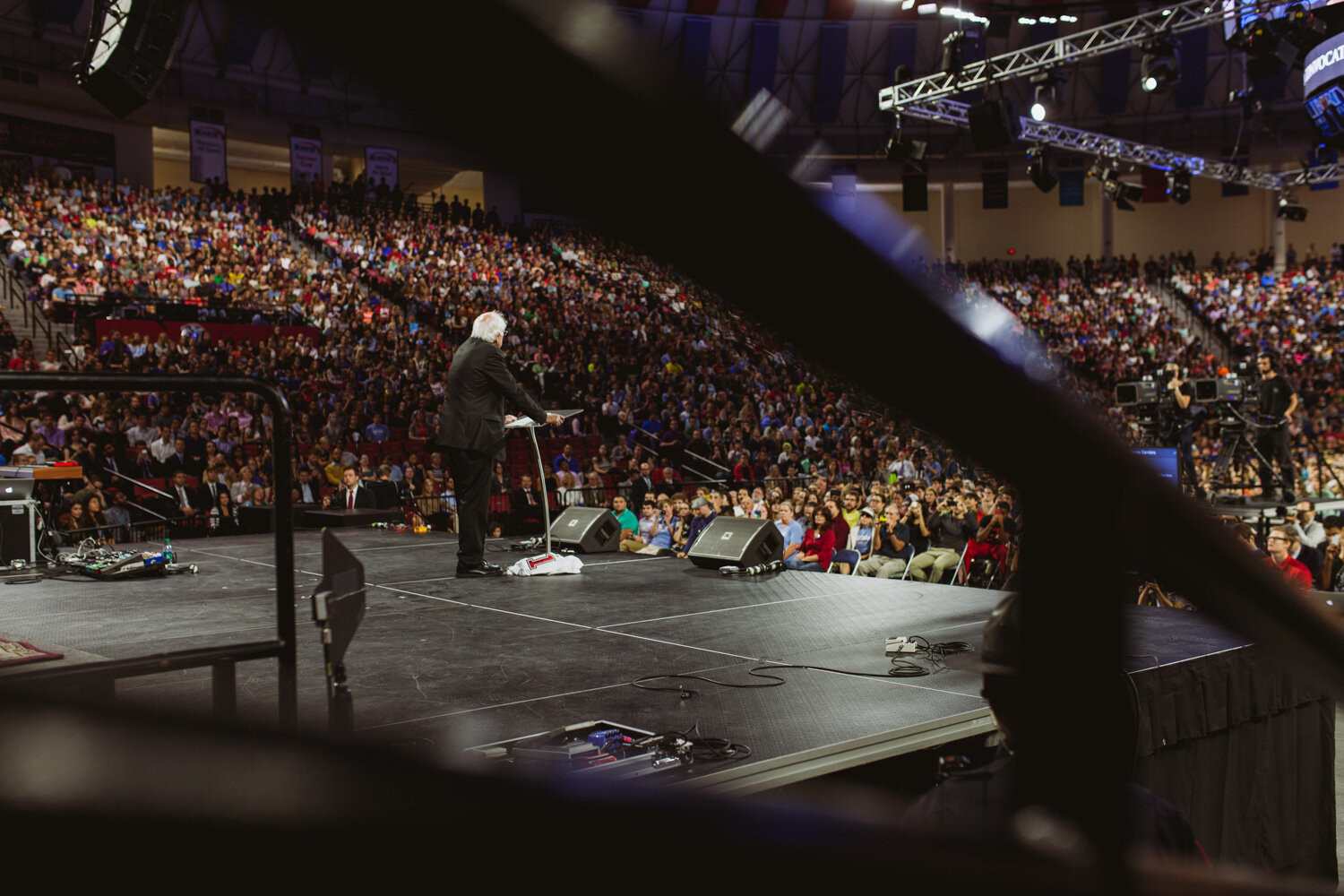

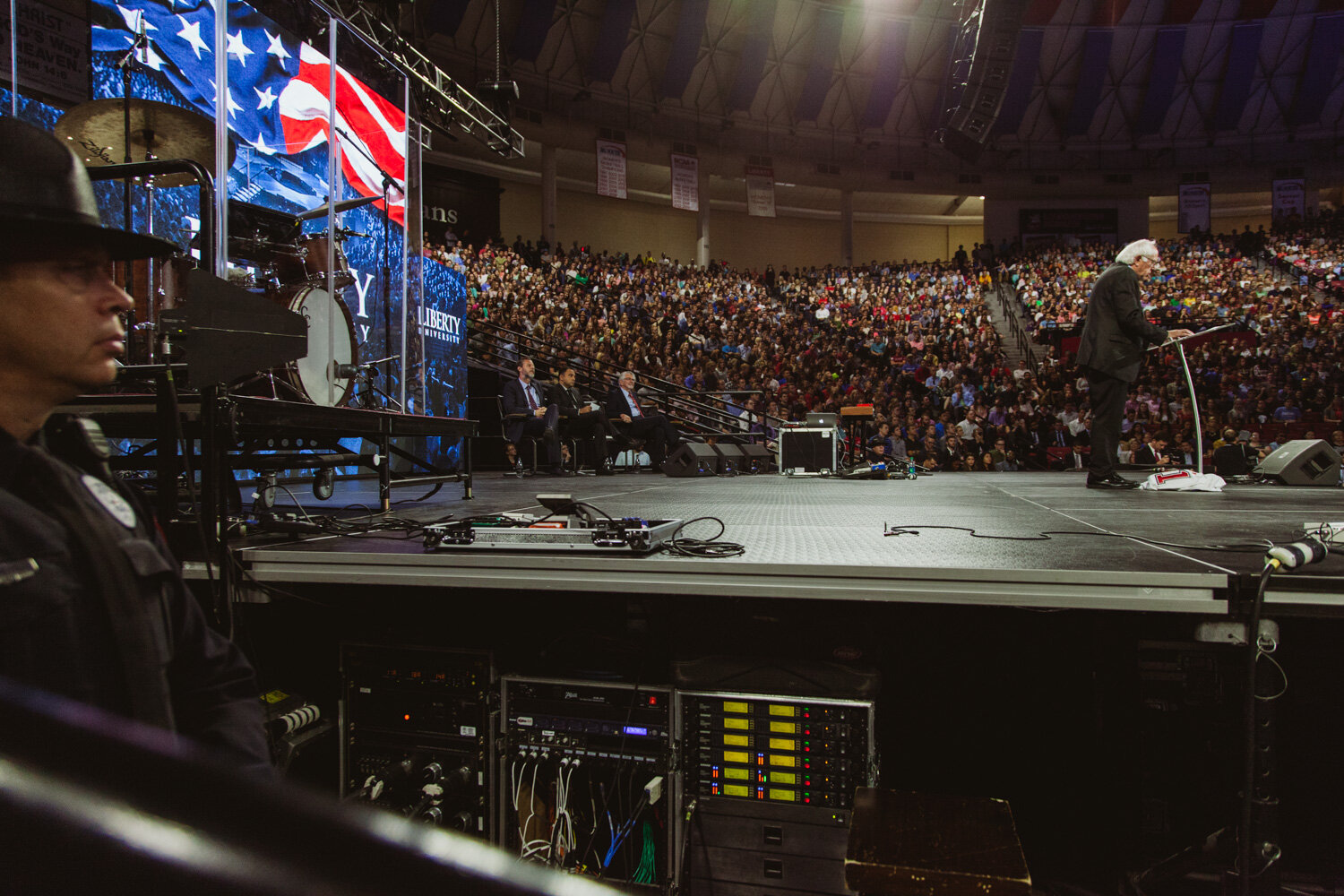





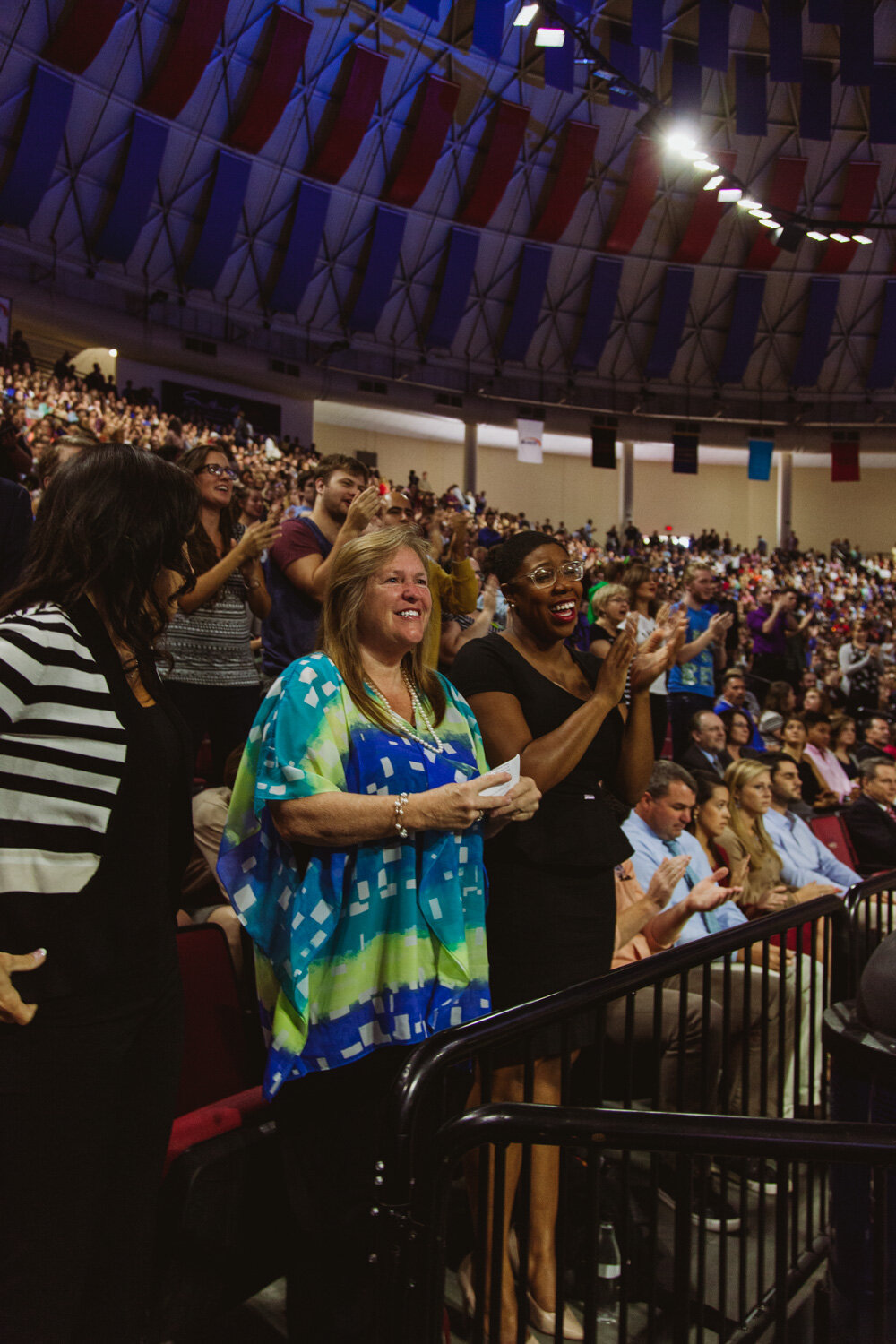


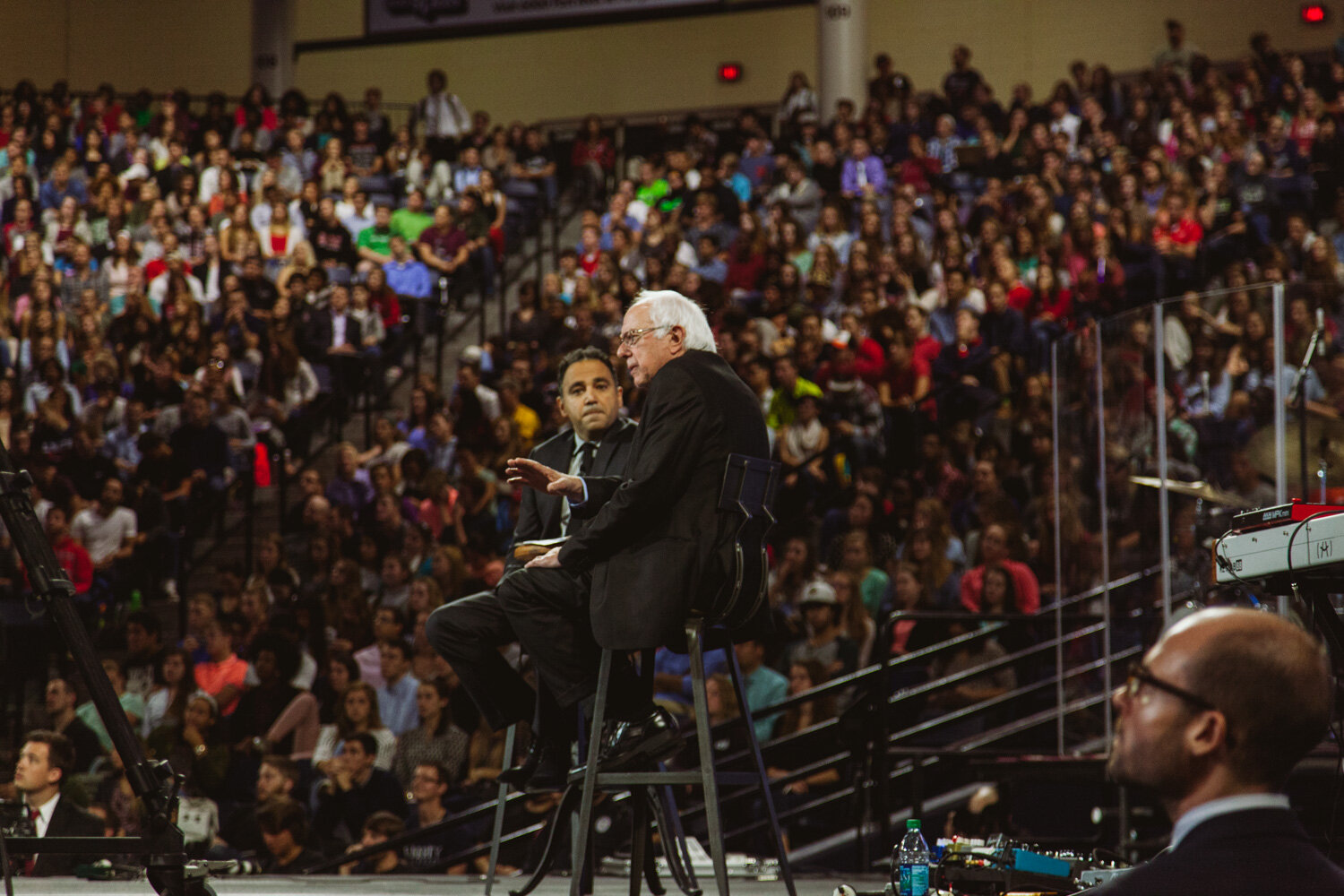

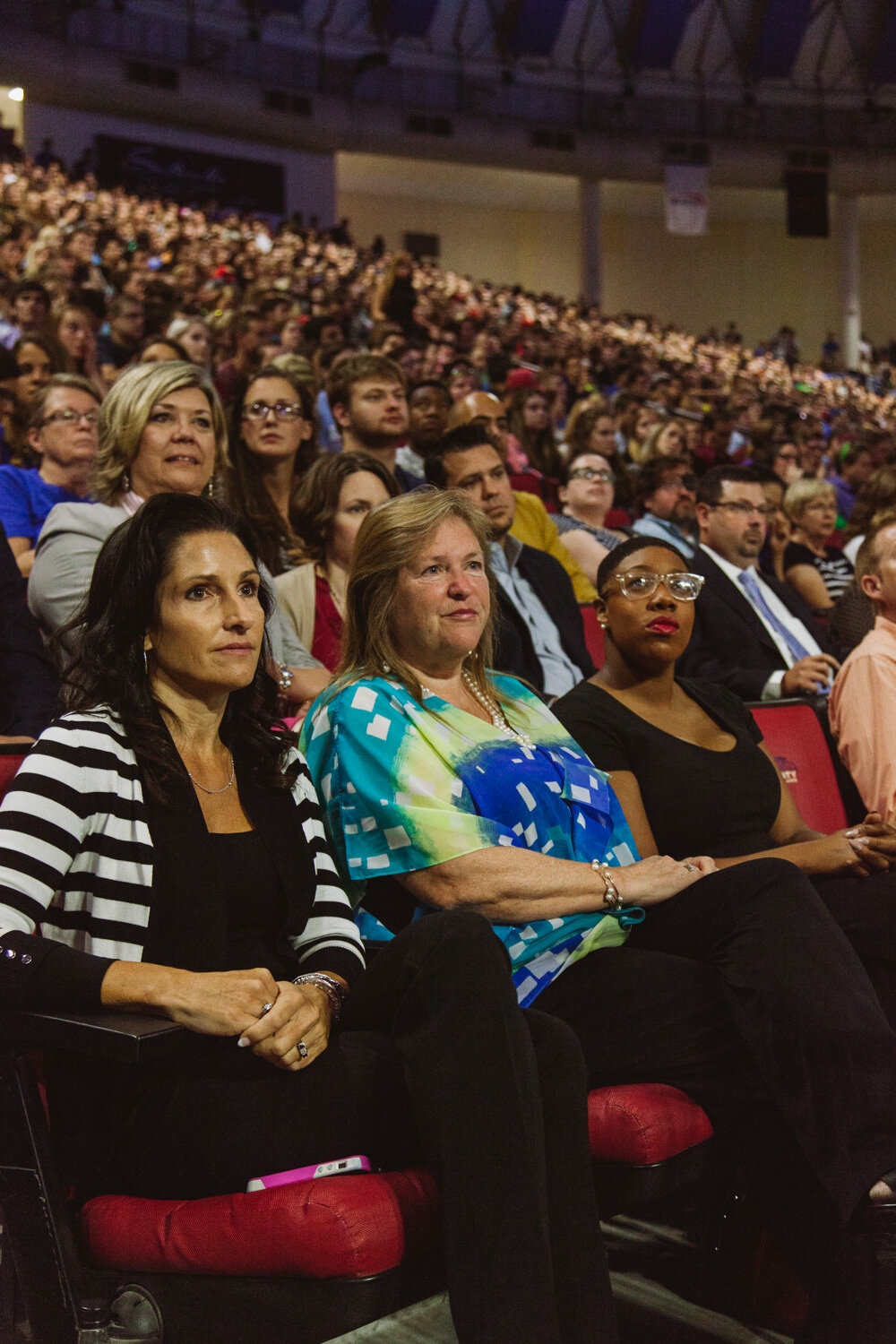
What I’m getting at is that hope is out there, however rarefied. And I think it’s the duty of those who see it to keep that candle burning, if not tip it to the person sitting next to you to light another, and another, letting the wax spill over your hands and Levi’s.
Even though I may seem somewhat positioned against Liberty and its administrative body (arguably with good reason), my frustration really comes from a place where I know people can be better or, rather, must be better if we are going to keep this beautiful thing called human life spinning for another few thousand years or so.
My preference is to not be ashamed of the fact that my undergraduate degree is from Liberty University, a place not exactly synonymous with intellectual integrity and compassion for those who are different.
My preference, as it was on that day, is for positive change to take me by surprise.
At Liberty, the cultural climate seems to have improved from the time my supervisors tasked me with editing less-than-favorable information from the school’s Wikipedia page (I declined), but there’s a long way yet to go. I hope to be able, as I was on that day, to take an electric blue and pink polka dot bicycle ride across town (like a one-person queer pride parade) to witness it happening.







Once the service was over, I ran into a couple of friends who are currently enrolled. Their energy at hearing Sanders speak was electric, encouraged and invigorated. They told me to follow them around back of the building so we could possibly meet him.
And so I did.
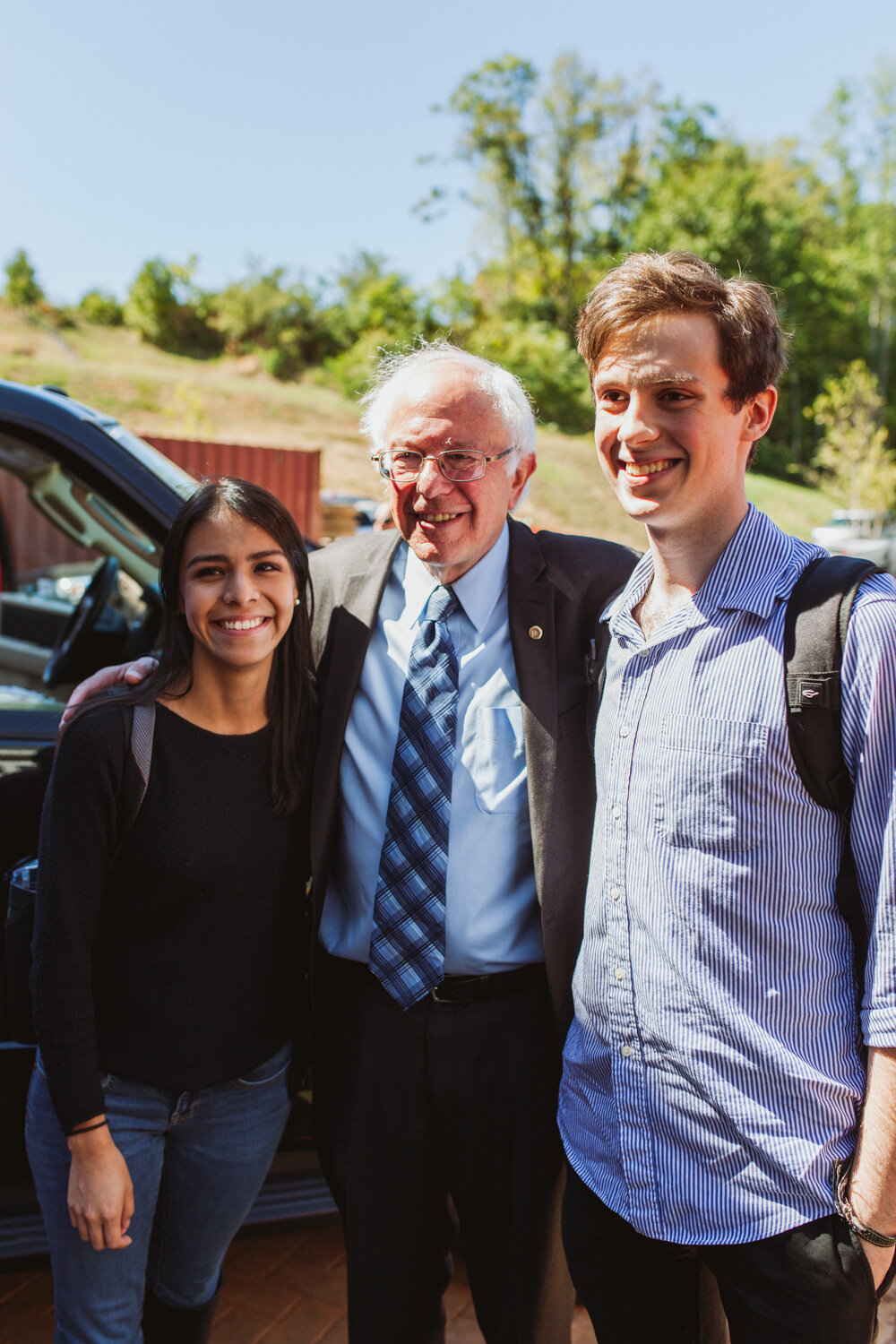
He graciously exited the SUV when he saw us, and said he had enough time to take a few photos. When it came my turn to say hi, I handed my DSLR to a friend and told him how to shoot (but neglected to give instructions on the focus, as you can see below).
I had never met a U.S. senator before, much less a presidential hopeful, and so I was grateful for the opportunity and wanted to say something meaningful. What I wanted to tell him was that in my 12 years of voter eligibility, I’d always cast my ballot in favor for who seemed like the lesser of the two evils. This election could be different. There’s a candidate who I believe actually represents me and the America I was raised to believe could be possible.

OOPS: Forgot to tell my friend how to focus my DSLR for this shot of US Senator Bernie Sanders and myself.
But I couldn’t get any of that out. Instead, I shook his hand, smiled for the camera and said, “Thanks for not being full of shit.”
He laughed, and looked into the camera. I’m pretty sure he knew what I meant.
Thoughts? Questions? Frustrations? Let’s talk about it (below).

You can Help Connect the World (with art)
From the desk (and heart) of @marceloasherQ
Although I’d love to go through the joyful process of focusing on an individually-crafted message for each of the people in my life, both the feasibility of such an effort and the time sensitive nature of what I have to say require that I reach out with the quickness.
Given the breadth of life I have lived so far, you might know me as a student, musician, parent of three daughters, high school literature teacher (in Argentina and in Virginia), writer, yoga practitioner, newspaper designer, web developer, content marketer, editor, journalist, outdoors enthusiast, traveler, photographer, filmmaker, insurance sales person, poet, pizza slinger … or one of many other roles I have stepped into over the years.
But I’m coming to you now fulfilling a task that’s at once something I’ve never quite tried before and a culmination of everything I’ve ever been: a director, cinematographer, and producer of an ongoing cultural exchange documentary series that seeks to uncover global connections through music and film.
As an introvert, reaching out in such a public way is not my norm (I’m growing). Being super vocal about my own projects can sometimes feel too narcissistic for me to do, but I feel that this project is so far beyond “me” that I’m unusually inspired to share it with you, hoping that perhaps you’ll seize the opportunity to be a part of it as well.
Someone I deeply respect recently told me that “art” projects (like this) are much more difficult to crowdfund than goods or causes. I insist, however, that Street Muse is all three — a film you can purchase, a humanitarian effort you can support, and an artistic project you can experience and enjoy.
This series began in 2012, when my dear friend and incredible musician (and excellent human) Nate “Gull” Rappole traveled with a small film crew to Kenya to perform his unique music and to interact with the local culture. After more than a month in Africa and many hours of editing, the hour-long Street Muse Kenya documentary came to be.
Film still: Meryl O’Connor
Over the past year, Nate, myself, and a few others have put in countless hours trying to ensure that the message of Street Muse does neither goes unnoticed nor ends with Kenya. We want to bring this project to as many nations as we can — not to impose any western (or personal) ideals on other people, but rather to connect with and showcase human culture as it is. You can help make this happen.
Ultimately, the underlying message of this series is for everyone — not just music music and travel enthusiasts. Street Muse is here to show that as humans, we are one people, and that cultural exchange is one way that we can choose to wage peace.
Yes, differences between us do exist, but my experience and belief is that through investigating and unpacking those differences, we inevitably find significant points of connection that far overshadow perceived details that make us believe we are “separate” from one another.
And in a socio-polticidal climate that is plagued by countless lines of division, this is my way of helping to foster peaceful, collaborative unity among all peoples.
While you can learn additional details from the Kickstarter campaign, I’ll leave some key points here:
We plan to explore Laos, Thailand, and Vietnam to learn how ecology influences the types of instruments and sounds humans make
The Street Muse Kenya team raised $10K in Kickstarter in 2012, but wound up spending more than twice that on overall production costs
We need to raise $25,000 by February 19 in order to reach our mark and receive any funding — it’s all or nothing
As of this writing, we’ve only recently broken the $6,640 mark
There’s less than one week left of the campaign
We have a long way to go, but you can help shorten that distance by getting involved. Whether it’s with $1, $1,000 (our largest pledge to date), or sharing to your social networks — every bit counts and is greatly appreciated.
Street Muse allows us (all of us) to bridge cultural gaps through music, and is a unique way to gain insight from personal connections and exchange.
We are currently screening Street Muse Kenya in Virginia, but would love to bring it to other cities over the next few days and weeks. Reach out to me if you like what you see and can help facilitate (in whatever way) a screening/Q&A/music performance night near you.
~Let’s continue this conversation together ~
Peace and love,
Marcelo Asher Quarantotto


Millennial Christians and the Post-Evangelical Love for Sufjan Stevens
As early as 2005, the Los Angeles Times was announcing the arrival of a new generation of musicians whose preference for introversion over boisterous ego and overwrought sexuality signaled a “Soft Revolution” of sorts. At the forefront of this timid overturning within the music world was Sufjan Stevens, a singer-songwriter whose sincere style seemed to offer some form of respite from the nonstop churning of commercial hits with easy hooks. Attributing Stevens’s success to an audience hungry for evidence of authentic artistic expression that could provide a break from the pulsing beat of nonstop commercialism, the Times opined, “It’s about the fact that everything is Coke and Pepsi these days, and it’s all mass-marketed to kids, and they just want some relief.”
In that sense, it’s obvious why we millennials are drawn to Sufjan Stevens music, and perhaps even more so for those of us raised on evangelical American rhetoric. The “relief” referred to in the Times piece was even greater for us. For in addition to being subject to the mass-marketing efforts of companies like Coke, Pepsi and Warner Bros., we also had an entirely separate marketing machine vying for our attention, one whose output seemed to say that music’s “goodness” is measured from its overt message rather than its aesthetic quality or formal nuances.
I first heard Stevens’s music in the twilight of the early 2000s while attending an evangelical Christian university in Virginia, and after a lifetime of Sunday School, Vacation Bible School, and W.W.J.D. bracelets — a lifetime of being in the world and not of the world.
From an early age, I was informed of an all-out culture war between Christians and non-Christians, those who knew the Truth and those who believed lies. Christian music was about Jesus’s love and believing the things that keep you free from eternal damnation. Non-Christian music, the music of the secular world, was about sex, drugs, and materialism and it was best to stay away from it.
As an alternative, we were offered music that sounded similar to its “secular” counterpart but was missing the same raw energy and effortless enthusiasm. By comparison, the music felt rather fake and lifeless. When I asked why this was the case, why secular music was so much more enjoyable than Christian music, the most common response was that sin is designed to be appealing and pleasurable. It didn’t feel like sin, though, in middle school when I’d stay up late in my bed, curled around a tape deck radio, listening to hours of programming and quickly (but quietly) hitting “Record” for the songs I liked but had to keep secret. It felt like excitement. It felt like discovery. A sonic portal to a brave new world.
What the Christian music industry struggles to realize is that when aesthetic value takes the back seat in the church van to over-present, often alienating dogma, the work fails at its central purpose: “to shatter the frozen lake of the soul,” as Franz Kafka once put it. In other words, the music fails to proselytize in the truest sense of the word: to create an experience wherein the individual recognizes and accepts something new that will change their life for the positive.
Stevens, at least in practice, understands that when you shout, people are inclined to cover their ears. When you whisper and invite them to hear, however, they just might incline themselves closer to get a better listen. It all sounds way more believable when you don’t feel the need to increase your volume to attract attention. By allowing his work to be the byproduct of faith rather than letting faith itself become the product, Stevens proves that authentic belief and expression can co-exist on the global stage. That such an expression of faith can even come through in a world where most everything else seeks attention by being big, loud, fast and bright, makes Stevens’ project all the more valuable to the ears of his listeners.
Such a post-evangelical approach to songwriting often means he never addresses his faith as static dogma, but rather within the context of where it truly exists: in the act of living, in breathing, in caring for others, in reconciliation and in loss.
Whether it be the beautiful or grotesque — a mournful ode to the devastations of bone cancer or reflections on John Wayne Gacy Jr. — Stevens manages to find a place of reconciliation through soft vocals, biblical references, and symphonic structures to create not so much songs to consume as narratives to visit and experience. One result of such narratives, for us millennials at least, seems to be relief. Relief from trying to reconcile the words of Christ with one’s interaction with a Church that so often tends to favor those same forms of expression and coercion which undermine the type of experiential richness available within the arts once attended to less dogmatically. Clearer still, Stevens shows us that carefully crafted expression can provide a space for theological concerns to exist in a public forum without alienating (or boring) anyone from any perspective.
Here we seem we seem to be invited to come together and enjoy something for what it is, and perhaps to reflect upon what makes it so meaningful – what makes life so meaningful – amongst a variety of people who are likely to have a range of answers to these questions. The possibility for such an exchange, be it in music or otherwise, seems to depend only upon our capacity to listen and to speak with a certain sincerity at our disposal. As if to sing, once again, without worrying what one’s tune might sell.

My faraway view of Sufjan Stevens at Wolftrap on July 22, 2016.
This article first appeared in Transpositions. I was asked by then editor (and longtime friend) Dennis Franklin Kinlaw III to write about this topic, given my perspective as someone who grew up in evangelical Christianity (but later realized said theological form to be an ill-fitting cloak for me and my experience). After many drafts over an estimated 80+ hours (with Denny providing much guidance), the piece took the above shape.

Mystic Numbers, Mythic Voice: A photosession with Lloyd Harmon
“THEREFORE, WITHOUT BEING ATTACHED TO THE FRUITS OF ACTIVITIES, ONE SHOULD ACT AS A MATTER OF DUTY, FOR BY WORKING WITHOUT ATTACHMENT ONE ATTAINS THE SUPREME.”
— THE BHAGAVAD GITA
Jeremiah Lloyd Harmon contacted me in the fall of 2015 to obtain headshots for an upcoming voice recital.
The request came at a time when anxieties about some personal issues were mounting. Taking photos started to become a challenge. The excitement I once felt when preparing for a shoot was nowhere to be found. I would get worried about the end result being "cool" enough.
I used to get a similar sinking feeling when I worked various day jobs, but instead of being worried about the hip-factor, the sensation had more to do with work that required me to compromise my ethics in some way. Having since shed all such employment, the reappearance of those feelings was troubling.
It was a time when I learned to lean into a quote from The Bhagavad Gita, which Steven Pressfield paraphrases in The War of Art:
"We have the right to our labor, but not to the fruits of our labor."
The shoot took place on a foggy afternoon in downtown Lynchburg, Virginia. With rainwater dripping all around us in a leaky parking garage, we started off with some traditional headshots. After about an hour of snapping photos on my 5D Mark II and a Pentax MX 35mm, I started to feel a bit more comfortable (submitting to the process).
I clipped my UE Boom Mini bluetooth speaker to a belt loop on my jeans and let tUnE-YaRdS set the new rhythm.
Jeremiah transitioned from formalwear into street clothes, and then into something more representative of his true self: a Lebanese thwab, chalked-up Nikes he wore during high school basketball days, a baseball cap and a hooded green bubble parka. He could have just as easily looked like a cross-dressing hobo, but instead the ensemble felt cohesive and natural. He pulled some recent artwork out of his car, a Sharpie from his pocket and inscribed the number “3” on each palm.
The singer held the backs of his hands up to his eyes, recreating the scenes with El Hombre Pálido in Guillermo del Toro’s Pan’s Labyrinth.
I meant to ask him then the significance of the 3s, but I often get into a moment-to-moment flow while my shutter fires. The thoughts slide away. I’m simply breathing: present and responsive to the human on the other side of the lens.
NUMEROLOGY
When I sent him some digital samples later on that evening, I shot him a message on Facebook.
“Oh yeah. What’s behind the 3s?”
“33 is one of my favorite numbers,” he corrected. “It’s related to numerology.”
My only experience with something even related to numerology, the belief that numbers have a mystical connection to real life events, is the esoteric Jewish practice of assigning numeric value to Hebrew words from the Torah I read about in Chaim Potok novels.
I’ve never given it a second thought, but I’m a lot more spiritually open/curious these days. I looked into it, and immediately connected with a couple lines:
“A 33 used to its full potential means that there is no personal agenda, only focus on humanitarian issues. Someone with 33 strongly featured in their chart has the ability to throw themselves into a project that goes far beyond mere practicality.”
While I have yet to begin any investigation into my “chart,” this sentiment struck me because of the way I approach my life and work as a single practice.
After years of being employed at various functions — copywriting for evangelical higher education, editing advertising-heavy newspapers filled with syndicated content, receiving payment from companies that mistreat their staff and getting glimpses in the national advertising world that hocks harmful products for the sake of profit for a select few — I came to the conclusion that I cannot ethically accept a check in exchange for my complicity with what I believe is damaging to our lives and environment.
No, I don’t wish to help you sell your tobacco product. I will respectfully decline to create video content for a low-prices retailer with an inhumane work culture and bottom-dollar wages. Making any amount of money is not worth the weight of my soul, knowing that I am perpetuating “the problem.”
Instead, I’d like to take the route numerology ascribes to the Master number 33: Focus on humanitarian issues, no matter how “far beyond mere practicality” doing so might seem.
I would much rather film a low-budget sizzler for a local yoga studio than create another wine commercial. Or, like in this instance with Jeremiah, help a fellow artist bring more beauty into the world.
TURNING PRO
Up until the day of this shoot, I had only known him as the fiery-haired singer-songwriter who kept popping into my periphery through the landscape of the local music scene.
About a year before, my brother sent me mobile footage from a coffee shop performance where Jeremiah played an original tune, “January Eyes,” on a harmonium, and also a cover of Gnarles Barkley’s “Crazy” — both of which challenged the capacity of my iPhone speakers despite the simple live setup of one voice and one instrument per song. I was shocked by his level of vocal ability, a cross between Jónsi, Jeff Buckley and a soulfulness uncommon to his complexion.
I texted back to my brother: “Holy shit.”
He’s an anomaly: a ginger who sings in a gospel choir, performing solos simultaneously transcendent and reserved that break through already-powerful backing harmonies. And his personal work draws heavily from electronic experimentation, otherworldly folk music, jazz, eastern philosophy and esoteric knowledge.
For a transient town such as ours where bigger talents pass through from time to time — but only to get a degree and shove on to bigger cities to find room for self-actualization —discovering an artist’s artist such as Jeremiah is a rarity. He isn’t waiting for greener pastures to flex the fullness of his creative muscle. Instead, he’s actively engaged with the process of fertilizing his work in the “here and now” of a strange (yet lovely) Bible belt city.
Pressfield, in Turning Pro (his follow-up to The War of Art), lists this attribute in his twenty Qualities of the Professional:
“10. The professional plays it as it lays.”
Even pro golfers foul up a stroke from time to time and send the ball into the cut. There’s no option but to submit to the reality of a bad shot (“play it as it lays”) and get back into the game. The lesson is that any amateur wanting to turn pro must learn to not approach these moments with discouragement, but to perceive shortcomings as opportunities to embrace her or his current skill level and to attempt a course-correct.
Accept and work with reality. There’s no other way to progress.
No, Lynchburg isn’t the most opportunity-laden town for artists of any medium (at the moment), but a true artist like Jeremiah practices regardless of externalities. I pass by his room now late at night (I now rent a makeshift “studio” — a spare room in the midtown duplex where he lives with two other singer-songwriters) and hear him live broadcasting his painting and songwriting process on Periscope. Or I come by in the middle of the day and hear him experimenting with outlandishly beautiful sound samplings and beat makings on an Akai keyboard. I hear him pumping away on his harmonium while he allows his voice to effortlessly float with the powerful, always-on-pitch control that a show tune singer would envy.
And while the experience of his art (like I said earlier) is one of transcendence, a near mythical vocal quality infused with the musings of a mystic, there’s also an undeniable practicality to its practice — an application of ass-to-chair (to paraphrase Norman Mailer), an application of Self to simply do the work we feel compelled to do while letting the unknown results of that labor come about of their own accord.
Perhaps this “mere practicality,” attributed to the number 33, the number Jeremiah wrote on his outstretched palms doesn’t mean impracticality, but rather a far greater practicality. Perhaps if instead of doing things merely for an anticipated and assured outcome or gain we did them simply for the sake of doing — for self and for humanity — we would find a far greater reward than we could have ever conceived.

The Prophetic Leanings of Matthew Paul Butler
Matthew Paul Butler (MPB) wants you to feel what he feels.
What he feels when he’s listening to Jeff Buckley, Bob Dylan and Songs: Ohia’s Jason Molina. What he feels when he’s writing or performing — perhaps putting down the microphone, unplugging the guitar and inviting you to hear the sound of your own voice and all the voices of those around you, together in the ever-present moment.
He wants you to feel connected, finding the way between you and yourself or you and something greater — even if that “something greater” is just the combination of yourself and anyone sharing in the experience.
MPB’s music is equal parts delicacy and anarchy — indie neo-folk soul rock — emotional and musical nuance and egress. His post-church, visceral spirituals are often raucous and attention grabbing, but with enough subtlety to incline you to turn up the volume (or stand closer) and let your eyelids fall in sweet meditation. You’ll experience a range of emotions set to lingering, distorted chords to sparse yet deft acoustic fingerings that provide reason to reflect or to throw down and dance.
Growing up between the Democratic Republic of Congo and the U.S. as the son of a charismatic preacher in a time when western Christianity drew a line through the music industry and proclaimed anything not overtly evangelistic to be unfit to be heard meant listening to the music he wanted to listen to was a conscious act of rebellion, carried out until early hours in the morning with a tape deck radio and foamy headphones.
MPB has in some ways strayed from his youth of leading music in churches, but there’s an obvious similarity between his father’s work as a minister and his as a minstrel. Both get to travel to meet new communities and reconnect with old friends, swapping stories about what it means to be alive, what it means to feel, to get bent, to disown old ways of doing things and to seek a new path.
Far from faithless, MPB’s beliefs are found in the expression of his day-to-day living, in composing melodic poems directed to strike you at your center and move you to do more than fold your arms and bob your head because you’re, as one lyric intones, “too cool to dance.”
Maybe, just maybe, you’ll heed his invitation to join in on the experience with him — to feel what he feels. You’ll listen to the words written for the exact moment you’re hearing them, for the exact ears that are hearing them, written for you to sing as your own words with your own voice, at once feel your feet grounded to the floor and your heart beating as if to remind you that you’re here, that you’re alive in the happiness and groaning of life’s chaotic orderliness.

Article: Function is Beauty — Falling Acorn Timber Framing Company
I first met Kyle Murphy not long before I moved to Buenos Aires. He was a recent transplant to Lynchburg, Va., from Raleigh, N.C. Another editor at my college paper had grown up with his wife, Carolyn, in Maine. I guess Carolyn came to Lynchburg on occasion, but they essentially moved to Lynchburg without knowing a soul.
When I finally moved back to Lynchburg, nearly three years later, I'd run into Kyle and Carolyn on occasion. We'd share anecdotes about our kids or news about our mutual friend.
Last month, I had the opportunity to sit down with Kyle for a freelance article I was to writing for Lynchburg Business Magazine. My preparation for such encounters includes as little preparation as possible. I may have a list of questions to ask, but it isn't often that I find it appropriate to ask all if even half of them. My preference is conversation to interview; the responses I get from the few questions I do ask end up being much more meaningful in these situations.
I approached our encounter not without a hint of butterflies. Kyle and I have known each other for nearly five years, but this was the first actual conversation we would have. The interview opened with my telling him that I would be asking a bunch of questions that might seem redundant or obvious, but for the sake of the interview I was going to pretend that I knew nothing about him. I didn't really have to pretend though. At most social gathering's, we'd tip-toe around one another without a damn thing to say. A lot of whatsups and nodding.
Our interview stretched on for three hours, challenging the batteries in my digital voice recorder. Friends dropped in throughout the conversation, and my playing back the recording revealed more than a few instances where I asked myself: "Why the hell did you say that."
That's to be expected.
Kyle went into great detail about his passion for timber framing, a minimalistic style of carpentry where the builder uses large beams and few tools (almost no power tools). And with everything that was said, there was one mantra that rang out: Do things well so others will do things well too. It sounds almost sacred, and it speaks volumes of what should be at the forefront of the mind during the artistic process. The ultimate goal of the artist, then, should not be one of glory or riches -- the goal of the artist should simply be to create the best art he or she can possibly can, that way others are prompted to do the same. Spending time in Brooklyn last week made me think of this concept again. I was surrounded by millions of people, and for any one of them there is probably another 10,000 trying to achieve the exact same thing. The perpetual result is a massive ball of flesh, stone, glass and steel that's in a constant wrestling match to produce better and better things.
But I digress.
The folks at Prototype Advertising were kind enough to publish the resulting article in the July issue of Lynchburg Business Magazine, and even gave me another assignment for another construction company. Is there such a thing as a "construction beat" in journalism?
The article in its entirety can be read here.
View Kyle's work at www.fallingacorn.com (slated for a rebuild in the near future).
Header imagery from www.fallingacorn.com.